Are you concerned about the people you advocate for when they come into contact with law enforcement? Do you hope for better outcomes when that happens? I have the same agenda, and that’s why I’m part of the RMADAC.
One of my greatest assets has been the relationships I have built in my community so that when I have a problem, I know who to call, by first name. And one of the most important keys to our collaborative success, is our joint ability to check any preconceived notions we have about each other at the door. We focus on our mutual goals instead of our differences, and we collaborate on the issue at hand.
We live in an adversarial system. Politics are adversarial. If you pinned me down and made me pick where I am politically, I’d say I’m center right, with a few key issues I’m passionate about. I’d wager most people are also somewhere in the center, but you wouldn’t know it from the mainstream media or even social media. You’d think we were all as uncomparable as Joe Biden and Donald Trump.
Have you testified in civil court? Adversarial. I recently spent over seven hours on the record being deposed by an attorney whose only goal was to trip me up. We spent all this time and money for both sides to prep for and do a deposition, and we didn’t even discuss solving the problem. Why can’t we just sit down, discuss the issue, and find an equitable solution? Our current social system isn’t designed that way. And it’s unfortunate.
We need to stop spending so much time finding things to be offended about and partitioning ourselves into micro groups and return to the idea of a melting pot. I certainly don’t mean we should give up who we are, but rather realize we are all in this together and often have similar goals, even when we’re on “opposite sides of the system.” It’s not us and them, it’s we. Let’s work together to solve problems rather than fight about who’s right. Yes, that means we’re going to have to both give a little and it’s going to take some work.
There are likely subjects that the advocates in my community and I don’t agree upon. But there is one area where I know we see eye to eye, and that’s improving officer response and consequently, better community outcomes. Honestly, without making an assumption and we all know what happens when we do that, I have no idea where most of them stand on any other issue. And that’s perfect. We collaborate on issues that are important to both of us.
In the last year I’ve had amazing opportunities because of a phenomenon I call “lending each other our credibility.” I’ve been able to present at The Arc’s National Council of Executives Summer Leadership institute in Chicago, The Dementia Action Alliance in Indianapolis, and the National ADA Symposium in Kansas City. In November I’ll be presenting at the Epilepsy Foundation in Atlanta. These are major national conferences, and these opportunities only happened because an advocate lent me their credibility. Opportunities quite similar to this one where I get to write to you via the great people at the RMADAC. I bet you wouldn’t be reading it otherwise! And it works in reverse too. By lending my credibility to the advocates with whom I’ve built relationships, they’ve had opportunities to educate and engage with the deputies/officers I know. We collaborated.
It’s unfortunate, but we live in a very adversarial climate; us versus them. But wouldn’t the world be better if we strived to work together, find places where we can collaborate, even when we don’t see eye to eye on other issues? I am fortunate in my role at my agency to have both the time and opportunity to build collaborative relationships with disability advocates in my area including The Arc of Larimer County, Dementia Together, The Rocky Mountain ADA Center, The Epilepsy Foundation of Colorado and Wyoming, and others. Through collaboration, we can better support and serve our constituent communities.
Guest Blogger Info:
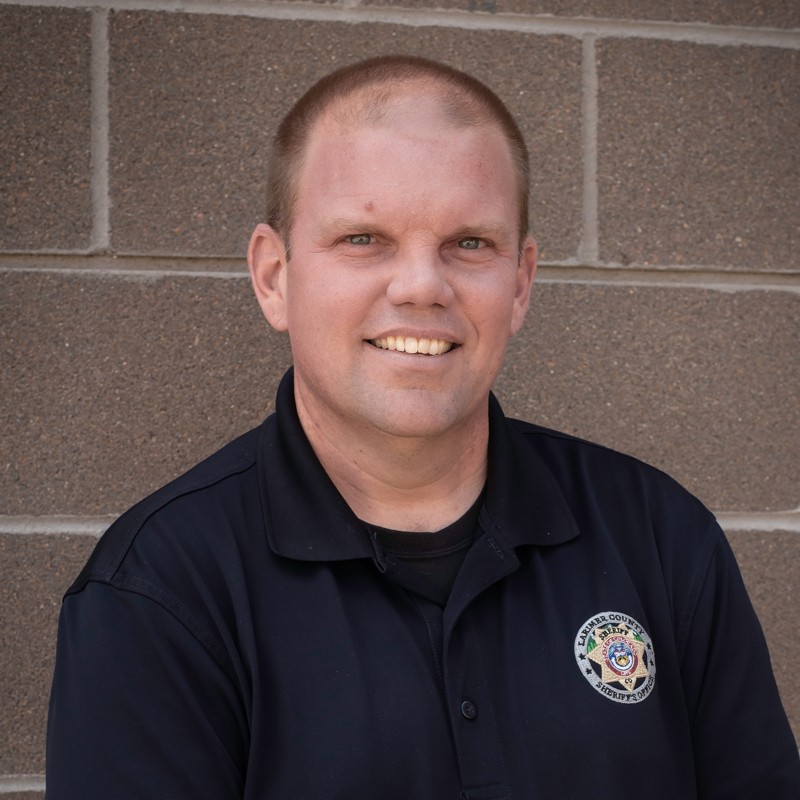
Chris Smith, MBA, ADAC, Deputy/ADA Coordinator Larimer County Sheriff's Office
Chris is at the center of where law enforcement, custody (jail), and disability rights meet. After a career in the business world, he has spent more than a decade as a deputy with the Larimer County Sheriff’s Office, and nearly four years as the agency’s ADA Coordinator. In 2021 he was appointed by the Colorado Attorney General to the Commission on Improving First Responder Interactions with People with Disabilities and selected as chair by the other commission members. He serves on the Rocky Mountain ADA Center's Advisory Committee and is a member of the Executive Board of Dementia Together. While all law enforcement interactions are important, he's developed a specific interest in improving interactions between law enforcement and people with disabilities. He's been a law enforcement instructor for many years on a variety of topics and regularly presents on the topic of law enforcement, the ADA, and interactions with people with disabilities at his agency, local law enforcement academies, and around the country.